
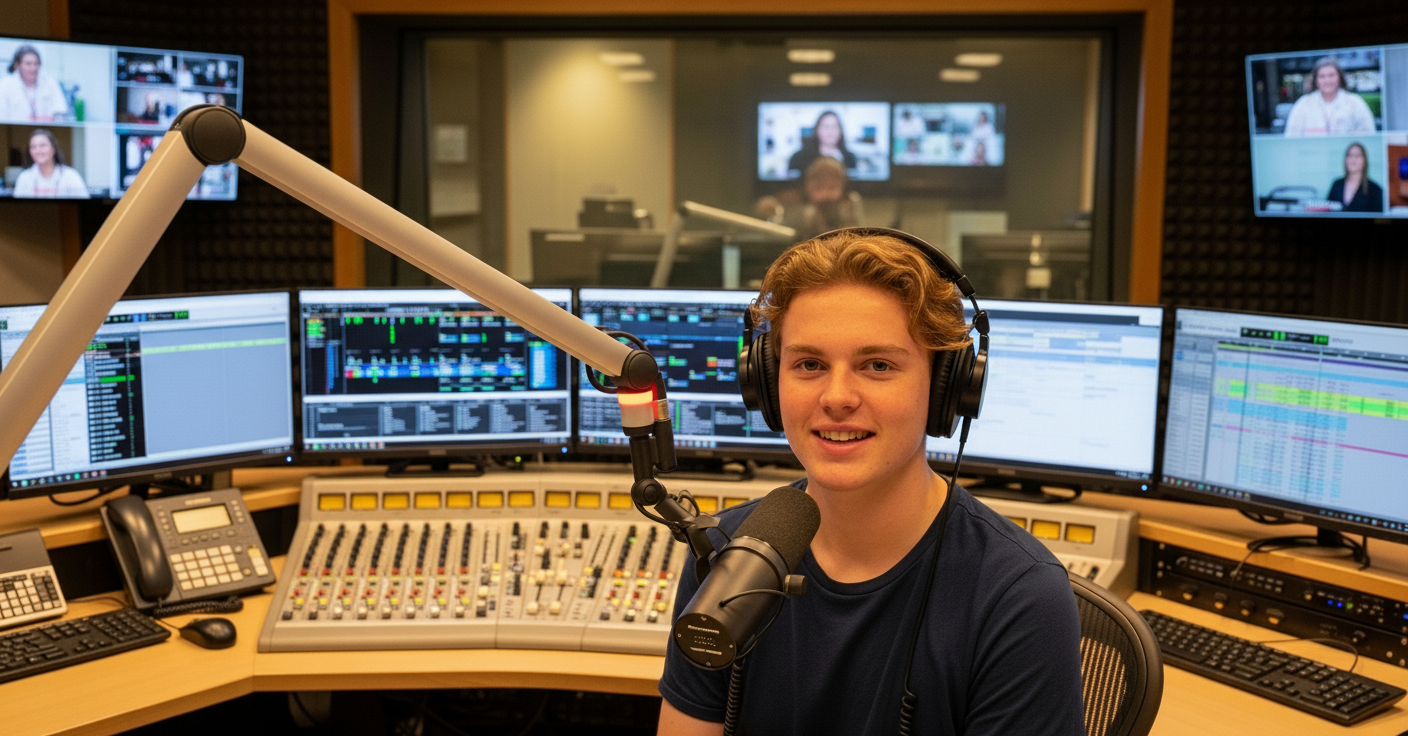
Ever wondered how your favorite radio hosts and TV personalities make broadcasting look so effortless? Behind every polished broadcast is extensive hands-on training with professional broadcasting equipment that forms the foundation for success in the dynamic world of media. In this article, we’ll explore the essential equipment and training needed for a successful broadcasting career, helping you understand how to position yourself for success in this creative and fulfilling field.
The Foundation of Broadcasting Success
The Radio and TV Broadcasting program at Beonair provides hands-on broadcasting training with industry equipment and broadcasting school facilities that prepare students for real-world media environments. During this 8-month* program, students learn essential skills from operating professional broadcasting equipment to creating compelling content and mastering both on-air and behind-the-scenes roles through practical media training.
Let’s explore the specific tools and techniques that make up the backbone of real studio broadcasting training and how they can help you launch an exciting career in media.
Essential Broadcasting Equipment and Techniques
Today’s broadcasting school studio equipment mirrors what professionals use in the field, making hands-on experience with these tools essential for career advancement.
-
- NewTek TriCaster Systems: Broadcasting schools often provide training on industry-standard TriCaster production systems – the same all-in-one video production platforms used by professional broadcast studios for live streaming, recording, and broadcasting content.
- Professional Broadcast Consoles: Quality radio and TV broadcasting programs feature modern broadcast consoles like Wheatstone and Audioarts boards, giving students hands-on broadcasting training with the same equipment used in today’s radio stations.
- Digital Audio Workstations (DAWs): Broadcasting education typically includes training on industry-standard audio editing software like Adobe Audition and Pro Tools – critical skills that employers expect from new broadcasting professionals.
- HD Cameras and Studio Setup: The best media school facilities include professional-grade cameras, lighting equipment, and green screen technology that matches current industry standards, preparing students for real production environments.
Learning to operate this professional broadcasting equipment creates a valuable skill set that employers actively seek, bridging the gap between education and professional work experience.
Broadcasting Training That Launches Careers
Hands-on broadcasting training is the most effective way to prepare for a successful media career – which is why it’s important to choose a Radio and TV Broadcasting program that focuses on practical experience in real-world settings.
-
- Student-Run Radio and TV Stations: Broadcasting training often includes working shifts at fully operational student-run stations, where you’ll create, produce, and broadcast original content using professional broadcasting equipment – giving you authentic experience that classroom theory alone simply cannot provide. According to the Bureau of Labor Statistics, “Broadcast, sound, and video technicians set up, operate, and maintain the electrical equipment for radio programs, television broadcasts, concerts, sound recordings, and movies.”(1)
- Portfolio Development: Throughout your training, you’ll create professional-quality content using broadcasting school equipment, building a portfolio that showcases your abilities to potential employers – from radio segments and podcasts to television productions and digital media content.
- ACTIVATOR Externship Program: This signature program offered by Beonair places students in real media environments where they can apply their practical media training alongside industry professionals, building valuable connections while gaining hands-on experience that sets them apart from graduates of theory-focused programs. This aligns with industry experts who emphasize that “On-the-job training includes setting up cables or automation systems, testing electrical equipment, learning the codes and standards of the industry, and following safety procedures.”(1)
This focus on real-world application transforms technical skills into professional competence, creating graduates who are ready to contribute from their first day on the job.
Broadcasting Career Pathways
Graduates of the Radio and TV Broadcasting program can pursue diverse career paths where their hands-on broadcasting training and familiarity with professional broadcasting equipment provide a competitive edge.
-
- Radio and Television Stations: Work as a broadcast technician setting up, operating, and maintaining electronic equipment for radio programs and television broadcasts, where your experience with industry equipment broadcasting school facilities directly translates to professional environments.
- Production Companies: Apply your practical media training at companies creating commercials, films, podcasts, and streaming content, where technical expertise gained through real studio broadcasting training is highly valued.
- Corporate Media Departments: Many organizations maintain in-house media teams for internal communications, training videos, and marketing content, offering stable employment where your experience with broadcasting school studio equipment gives you an immediate advantage.
As you consider these exciting possibilities, let’s highlight the key factors that can help you succeed in your broadcasting career journey.
Keys to Broadcasting Success
The most successful broadcasting professionals share common traits centered around hands-on broadcasting training and technical proficiency.
-
- Master the Equipment: Your comfort level with professional broadcasting equipment directly impacts your employability – the Society of Broadcast Engineers notes that certification provides “evidence of an individual’s qualifications to serve as an operator at a broadcast station” and significantly enhances employment prospects.(1)
- Prioritize Practical Experience: Real studio broadcasting training on industry-standard equipment gives you an advantage over candidates with only theoretical knowledge – employers value professionals who can operate broadcasting school studio equipment from day one.
- Build a Professional Portfolio: Using media school facilities to create actual broadcast content demonstrates your abilities to potential employers more effectively than any resume could, showcasing your readiness for professional work.
With these insights in mind, you’re ready to take the first step toward a rewarding broadcasting career through practical media training on industry equipment broadcasting school facilities.
Start Your Broadcasting Journey Today
Your path to a rewarding broadcasting career begins with quality hands-on broadcasting training on industry-standard equipment, and Beonair is ready to help you develop the skills, connections, and confidence you need to succeed – schedule a campus tour today to see our professional broadcasting equipment and media school facilities in person!
Footnotes
[1] https://sbe.org/certification/sbe-certification-program/