
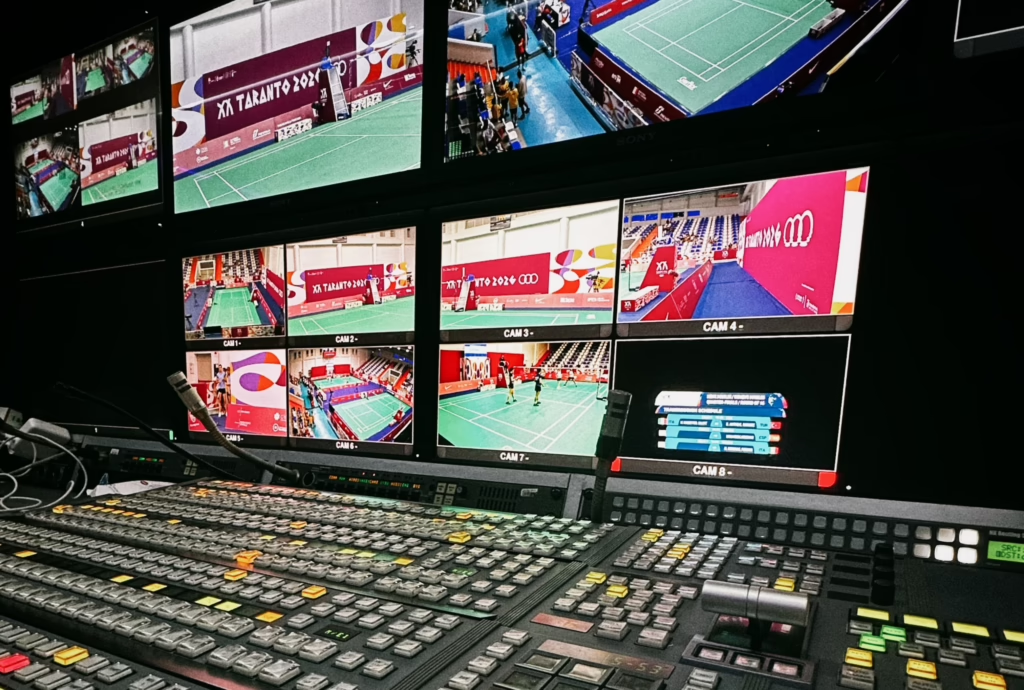
If you are trying to figure out how to get into sports broadcasting, start with the skills the job actually demands. A sports broadcaster may need to research stories, interview athletes, deliver live coverage, work with a production team, edit audio and video, and create digital content for radio, television, streaming, and social media. There is no single route into the sports industry, but most paths involve the same basics: build practical broadcasting skills, gain experience, create a strong demo reel and portfolio, make industry connections, and pursue entry-level roles. Hands-on Sports Broadcasting training at BeOnAir will give you the opportunity to practice many of those skills before using them professionally.
Table of Contents:
- How to Get Into Sports Broadcasting: 6 Steps
- Do You Need a Degree to Get Into Sports Broadcasting?
- What Jobs Can You Do in Sports Broadcasting?
- What Skills Does Sports Broadcasting Training Teach?
- How Do You Build a Sports Broadcasting Demo Reel?
- Where Do Sports Broadcasters Usually Start?
- Is Sports Broadcasting a Good Career?
- How BeOnAir Helps You Build Sports Broadcasting Skills
- Frequently Asked Questions
How to Get Into Sports Broadcasting: 6 Steps
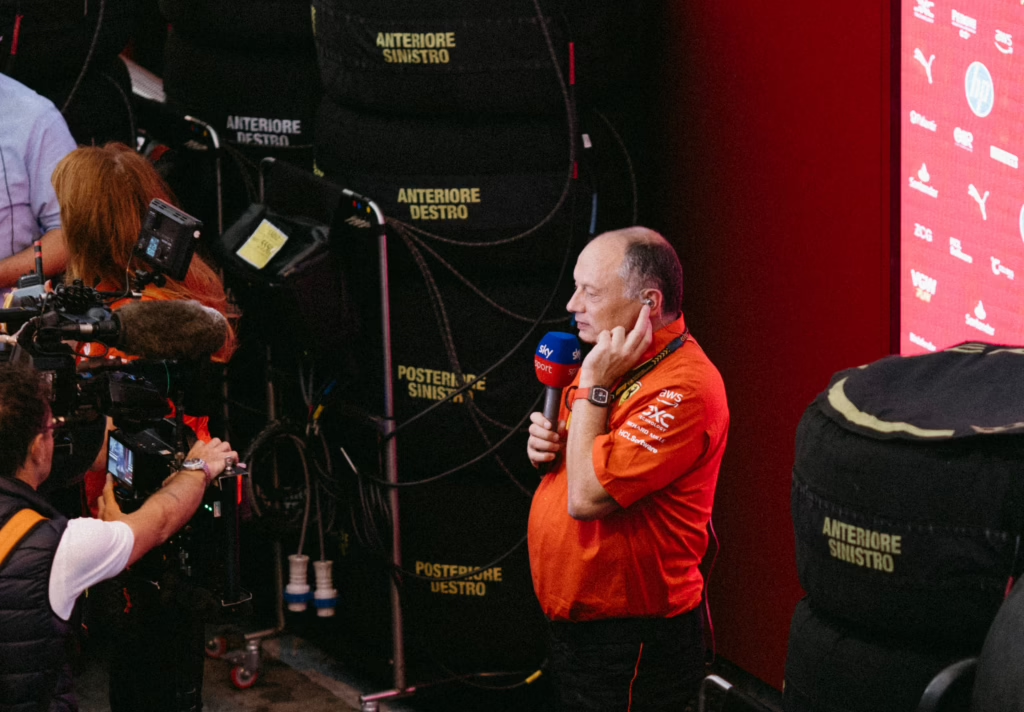
A clear path into sports broadcasting often looks like this:
- Learn the fundamentals -Build knowledge of broadcasting, sports journalism, interviewing, reporting, audio, video, and live production.
- Develop practical skills – Practice using cameras, microphones, editing tools, production equipment, and digital platforms.
- Gain experience – Cover local teams, student athletics, college sports, podcasts, or other sporting events.
- Build a demo reel and portfolio – Show your strongest on-air, reporting, editing, or production work.
- Build relationships – Connect with instructors, classmates, producers, alumni, and people you meet while covering games.
- Pursue entry-level roles – A first job may be as a production assistant, board operator, camera assistant, digital producer, or junior broadcaster.
Do You Need a Degree to Get Into Sports Broadcasting?
Not every sports media job follows the same education path.
The U.S. Bureau of Labor Statistics says broadcast announcers and radio DJs typically need a bachelor’s degree in journalism, broadcasting, communications, or a related field.
A traditional journalism degree or mass communications program may also cover areas such as reporting, print journalism, or media law. Hands-on broadcasting training may place more emphasis on production, audio, video, on-air work, and practical experience.
Whichever route you choose, employers may also look at your technical ability, experience, demo reel, and portfolio.
What Jobs Can You Do in Sports Broadcasting?
Play-by-play is the role many people imagine first, but sports media depends on a much larger team working both on air and behind the scenes.
Common roles include:
- Play-by-play announcer: Describes the action during live sports and keeps the audience oriented.
- Color commentator or analyst: Adds strategy, statistics, and expert insight.
- Sideline reporter: Interviews players and coaches and provides updates during games.
- Production assistant or associate producer: Supports research, timing, graphics, clips, rundowns, and broadcast logistics.
- Digital content producer or video editor: Creates highlights, interviews, social clips, and other sports content.
- Sports podcast host or producer: Develops interviews, analysis, and original audio programming.
- Sports journalist or reporter: Researches sports news, interviews sources, and develops compelling narratives around athletes, teams, and events.
These roles increasingly overlap. A broadcaster may report from a game, record a podcast, edit a social clip, and contribute to an online segment during the same week.
Our history of sports broadcasting explores how the industry has changed, while our guide to trailblazing women in sports broadcasting shows how different careers can develop.
What Skills Does Sports Broadcasting Training Teach?
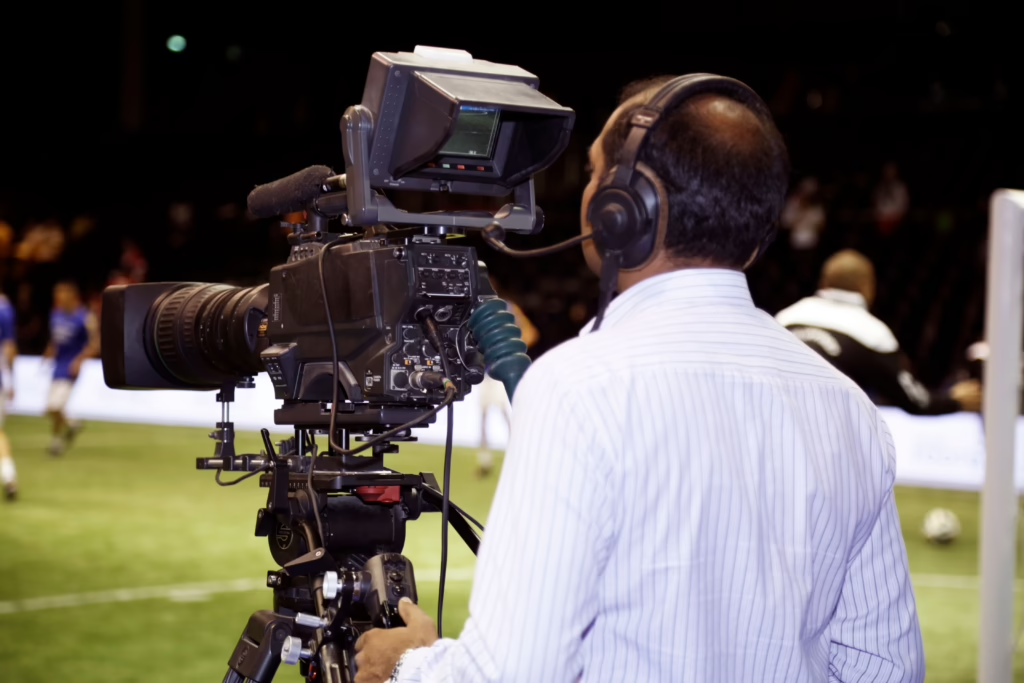
Knowing sports helps. Turning that knowledge into professional sports coverage requires additional skills.
Live Delivery and Play-by-Play
- Live sports do not wait for you to find the perfect sentence.
- Broadcasters need to describe the action clearly, keep pace with games, and know when to speak and when to let a moment breathe.
- Practice helps develop pacing, pronunciation, timing, confidence, and the ability to recover when something goes wrong.
- These skills are especially useful during live events, breaking news, and other situations with tight deadlines.
Sports Journalism and Research
- A strong broadcast begins before the game.
- Sports journalists and broadcasters research players, injuries, recent results, statistics, team history, and current storylines to provide useful context as the action unfolds.
- Research also improves interviews and helps you recognize which stories are worth developing before, during, and after a game.
Interviewing and On-Camera Communication
- Sports media professionals regularly speak with athletes, coaches, analysts, and fans.
- Good interviewing requires listening, recognizing an interesting answer, and asking useful follow-up questions.
- On-camera practice can also improve eye contact, body language, timing, and confidence.
Live Production and Behind-the-Scenes Skills
- A successful sports broadcast depends on much more than the person viewers hear or see.
- Training can introduce students to cameras, microphones, audio boards, switching, graphics, cueing, radio broadcasting, video editing, and the timing required for live production.
- These skills can also open doors to production roles if you discover that working behind the scenes fits your work style better than being on air.
Digital Content
- The final whistle does not end the content cycle.
- Radio stations, television networks, sports brands, local teams, and digital publishers need highlights, interviews, podcasts, recaps, social video, and other content after sporting events.
- The ability to adapt a single event for multiple digital and online platforms can be valuable in modern sports media.
How Do You Build a Sports Broadcasting Demo Reel?
A demo reel should show your strongest work quickly.
For on-air roles, this might include:
- A play-by-play clip
- A studio introduction
- A sideline report
- An interview
- A live or unscripted moment
A production-focused portfolio might include edited highlights, graphics, audio production, digital video, or packages you helped create.
You do not need national television footage to begin. Campus media, college radio, local games, independent streams, podcasts, student productions, or a YouTube channel can all provide useful material.
Keep replacing older work as your skills improve.
Where Do Sports Broadcasters Usually Start?
Most broadcasters do not begin with a major national assignment.
Early opportunities may come through college radio, local radio stations, school athletics, regional sports coverage, production crews, podcasts, digital media, or work with local teams.
These smaller assignments help you learn how to prepare, meet deadlines, respond when plans change, and work with a production team.
They also help with building relationships. Instructors, classmates, alumni, producers, and people you meet on assignments can become part of your professional network.
Long-term career growth often comes from combining skill with reliability: prepare well, take feedback, and become someone others want to work with again.
Is Sports Broadcasting a Good Career?
Sports broadcasting can be a fulfilling career for people who are genuinely interested in sports, storytelling, live production, and fast-moving media.
Whether it is the right career for you depends partly on your work style. Some people enjoy live sports, travel, unpredictable schedules, and tight deadlines. Others prefer reporting, editing, producing, or working behind the scenes on digital content.
The U.S. Bureau of Labor Statistics reports that broadcast announcers and radio DJs earned a median hourly wage of $22.76 in May 2025, while the highest 10% earned more than $66.56 per hour.
The traditional announcer job market is competitive. BLS projects employment for broadcast announcers and radio DJs to decline 8% from 2025 to 2035. Across the broader announcer and DJ category, about 3,700 openings are projected each year, largely due to workers leaving the occupation or retiring.
That is why it is useful to look beyond one title when considering job prospects and salary potential. Sports media also includes reporting, production, editing, streaming, podcasts, team-owned channels, and digital content.
For students and career changers, broader skills can offer more avenues to enter the industry and adapt as technology evolves.
How BeOnAir Helps You Build Sports Broadcasting Skills
Reading about sports broadcasting can help you understand the field. Practicing the work is how you begin developing professional ability.
BeOnAir’s Sports Broadcasting program gives students interested in sports media hands-on opportunities to develop skills across on-air delivery, production, interviewing, audio, video, editing, and content creation.
Students can develop hands-on experience relevant to both on-air talent and behind-the-scenes roles. Sports coverage depends on broadcasters, producers, production assistants, camera crews, editors, audio professionals, and digital creators working together.
Training can also help students begin creating material for a demo reel and portfolio as they prepare for internships and entry-level jobs.
If you want a broader media foundation, BeOnAir’s Radio & TV Broadcasting program develops production and on-air skills that can transfer into sports, news, entertainment, radio, television, and digital media.
BeOnAir has seven campuses across four states and offers six diploma programs. You can also review our student outcomes, read student testimonials, and explore financial aid as you compare your education options.
Take the First Step Toward Sports Broadcasting
You do not need to begin in a national booth.
The first step is developing the skills, experience, portfolio, and relationships that can help you move toward the opportunities you want.
Book a campus tour to see BeOnAir’s studios, contact our admissions team to talk through your options, or apply online when you are ready to start training.
Frequently Asked Questions About Sports Broadcasting Careers
What is the difference between a sports broadcaster and a sports journalist?
A sports broadcaster typically works in live or recorded audio and video, including play-by-play, commentary, studio hosting, and sideline reporting. Sports journalism places more emphasis on research, reporting, interviews, and storytelling. Modern sports media often combines both.
Can you get into sports broadcasting through streaming or social media?
Yes. Teams, leagues, digital publishers, sports brands, and independent creators produce sports content across streaming services, social media, podcasts, and other digital platforms. Creating your own content can also help you practice and strengthen your portfolio.
What is the best way to gain experience in sports broadcasting?
Look for opportunities that let you do the work repeatedly. Campus media, student television, college radio, athletic department streams, local games, podcasts, local teams, and production projects can all provide practical experience.
Can you get into sports broadcasting without industry connections?
Yes. Your network can grow as you gain experience. Training, internships, campus productions, local assignments, alumni networks, and industry events can introduce you to people already working in sports media. Strong relationships are most valuable when people also know you as prepared, reliable, and capable.