
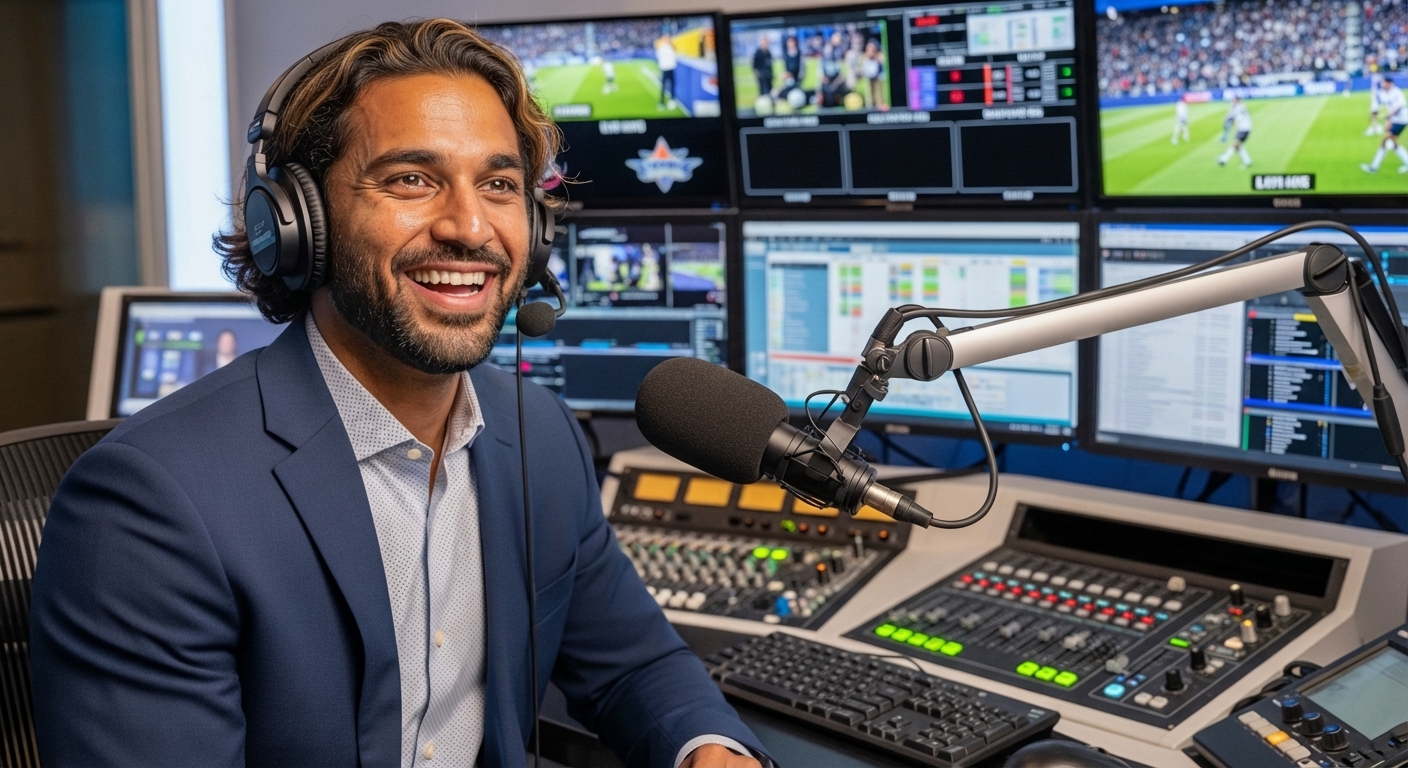
If you’ve ever caught yourself analyzing a play like a commentator or imagining what you’d say on air during a big game, you’re not alone. A lot of people are drawn to sports broadcasting because it sits right at the intersection of storytelling, performance, and pure love of the game.
What stops many people, though, is the assumption that you need a journalism degree to even get started.
You don’t.
There isn’t one fixed path into sports broadcasting. In fact, many people working in the field today didn’t follow a traditional route at all. What matters more is how you build your skills, gain experience, and position yourself early on.
If you’re exploring sports broadcasting careers, here’s what that path can actually look like, especially if you’re starting from scratch.
What a Sports Broadcasting Career Path Actually Looks Like
Sports broadcasting isn’t just one job. It’s a mix of roles that all contribute to how fans experience a game.
Some people end up on air, calling plays, hosting shows, or reporting from the sidelines. Others work behind the scenes, running cameras, editing footage, producing segments, or managing live broadcasts.
Most people don’t jump straight into their ideal role.
A more realistic path looks like this:
- Start with foundational skills like voice, editing, and production
- Build a portfolio or demo reel
- Get hands-on experience wherever you can
- Move into entry-level roles like production assistant or board operator
- Gradually work toward more visible or specialized positions
If you’re curious about the different roles available in media and broadcasting, it’s worth exploring how varied this field really is.
That progression matters more than a specific degree. Employers are looking for people who can do the work, not just talk about it.
Do You Actually Need a Journalism Degree?
Short answer: no.
A journalism degree can be helpful for some people, but it’s not a requirement for getting into sports broadcasting. What employers care about tends to be much more practical:
- Can you communicate clearly on air?
- Do you understand how a live broadcast works?
- Can you edit audio or video?
- Do you have examples of your work?
If you can show those things, you’re already ahead of a lot of applicants.
This is why more people are choosing hands-on training environments over traditional four-year programs. Instead of spending years in lecture-heavy courses, they’re focused on actually practicing the skills they’ll use in the field.
For example, in the Sports Broadcasting program at Beonair, students spend their time working in studio environments, learning to perform on air, and getting comfortable with the pace of real production. It’s a very different experience from a traditional classroom, and for a lot of people, it’s a better fit.
The Skills That Actually Matter (and How to Build Them)
If you’re serious about getting into sports broadcasting, your focus should be on building a core set of practical skills. These are the things that will show up in your work and what employers will notice first.
On-Air Communication
This isn’t about having the perfect voice. It’s about clarity, confidence, and being able to think while you speak.
You’re reacting in real time, often with no script. That takes practice.
Recording yourself, doing mock commentary, or even breaking down games out loud can help you get more comfortable. Over time, you’ll find your rhythm and your own voice.
Audio and Video Editing
Even if your goal is to be on air, you’ll almost always need to know how to work behind the scenes.
Editing highlights, cleaning up audio, or putting together segments are all part of the job, especially early in your career.
This is also where a lot of people build a portfolio. A strong demo reel can open doors much faster than a resume alone.
Understanding Live Production
Live sports are unpredictable. Things change quickly, and broadcasts have to adapt in real time.
Learning how a control room works, how segments are timed, and how different roles interact during a live event gives you a huge advantage.
It also makes you easier to work with, which matters more than people think.
Adaptability and Presence
You don’t always get a second take in this industry.
Whether you’re interviewing someone, reacting to a last-minute play, or filling unexpected dead air, you need to stay composed and keep things moving.
That ability comes from experience, not theory.
Where You Can Start Gaining Experience
One of the biggest misconceptions about sports broadcasting careers is that you need to wait until you’re ready.
You don’t.
There are a lot of ways to start building experience right now:
- Recording your own commentary over games
- Starting a sports-focused podcast or YouTube channel
- Volunteering with local teams or community events
- Helping with production for small broadcasts or school programs
None of these need to be perfect. The goal is to get comfortable creating, speaking, and working with media.
Over time, these pieces become your portfolio, and that’s what helps you move forward.
Choosing the Right Training Environment
At some point, most people hit a plateau trying to learn everything on their own. That’s where structured training can make a big difference.
The key is finding an environment that gives you real practice, not just theory.
Hands-on programs are designed to simulate the industry’s actual pace and pressure. You’re not just learning what broadcasting is. You’re doing it.
That’s the idea behind the Sports Broadcasting program at Beonair. Students spend time in studio settings, working with equipment, practicing on-air delivery, and getting feedback from instructors who understand the industry.
For someone without a journalism background, that kind of immersion can help close the gap much faster.
What Your First Roles Might Look Like
Your first job in sports broadcasting probably won’t be your dream role, and that’s okay.
Common entry points include:
- Production assistant
- Board operator
- Video editor
- Content creator for digital platforms
These roles give you exposure to how everything works behind the scenes. You start to understand timing, teamwork, and the flow of a broadcast.
From there, you build.
People move into on-air roles, producing, or more specialized positions over time, often by showing initiative, building relationships, and continuing to improve their skills.
Why This Path Works for Career Changers
If you’re coming from a different background, you’re not alone. Many career changers enter broadcasting by building skills and gaining hands-on experience over time (Switching to a Broadcasting Career: Career Changer Success Stories, Training While Working, and Skills Transfer Analysis).
In some ways, having a different background can even help:
- You may already have strong communication skills
- You understand how to work in professional environments
- You bring a different perspective to storytelling
The biggest shift is getting comfortable being new at something again and putting yourself in situations where you can learn quickly.
Final Thoughts
Getting into sports broadcasting without a journalism degree isn’t about finding a shortcut. It’s about focusing on what actually moves you forward.
Build real skills. Get experience wherever you can. Put your work out there. Learn by doing.
There’s no single right way into this field, but there are plenty of paths that work.
If you’re willing to start before you feel completely ready, you’ll be further ahead than you think.