
Introduction
Podcasting is rooted in human connection. Above all, a great show depends on voice, story, and genuine authenticity. Whether you host an intimate interview or lead a lively group discussion, listeners tune in for real human connection.
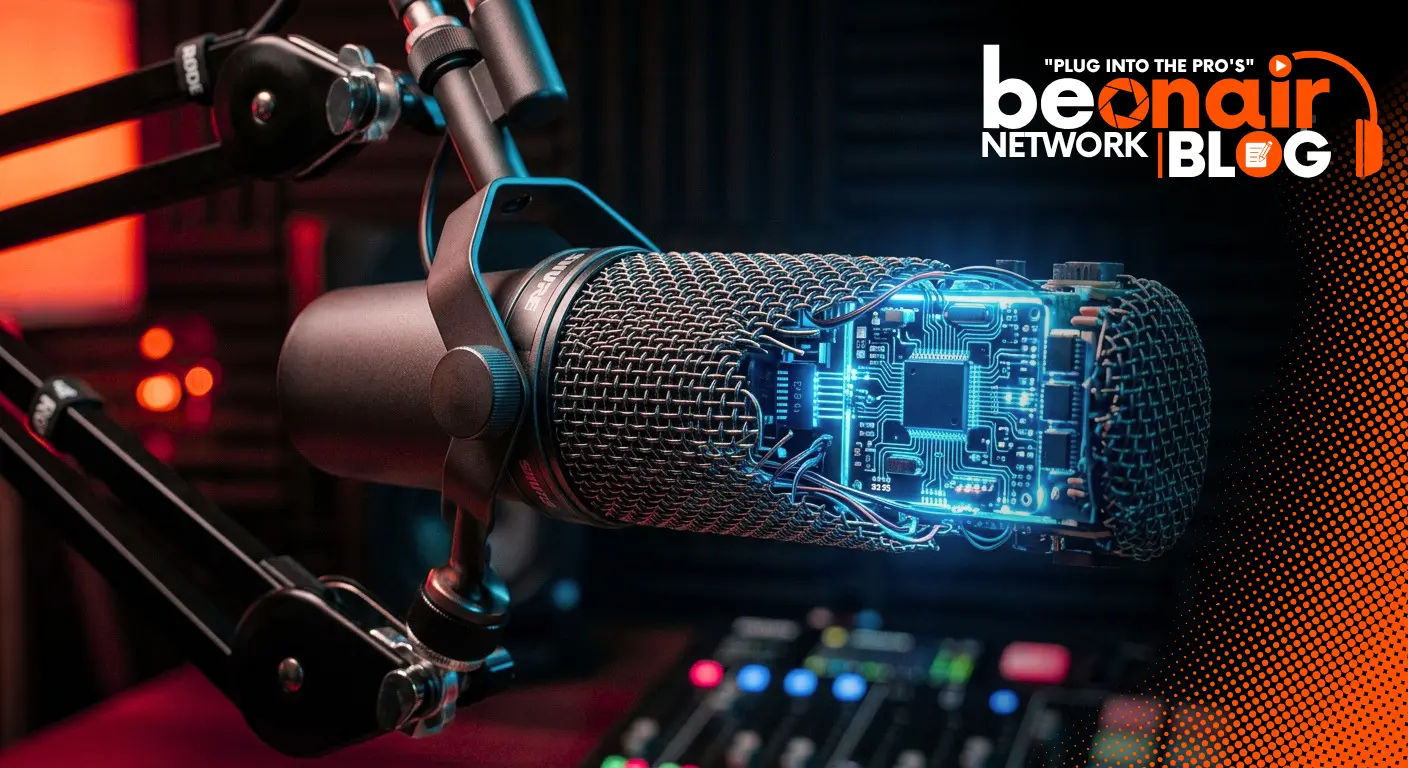
However, the media landscape is undergoing a massive shift. Artificial Intelligence (AI) is no longer a futuristic buzzword in broadcasting—it is a core creative partner.
Specifically, AI tools now handle repetitive tasks like noise reduction, automated transcription, and audience data analysis. Consequently, creators spend less time dealing with technical friction. As a result, they can focus directly on perfecting their craft.
At the Beonair Network of Media Schools, we teach creators how to combine new technology with real human storytelling. Below, we break down how AI is reshaping podcasting—and how you can master both worlds.
The “Quick Answer”: How is AI changing podcasting?
Artificial Intelligence is reshaping podcasting by automating time-consuming tasks. For instance, creators can now use AI for script outlines, guest research, noise reduction, and transcriptions. By adopting these AI workflows, media producers can remove technical friction. Ultimately, this gives creators more time to build authentic human connections with their audience.
1. Smart Pre-Production: AI as Your Co-Producer
The hardest part of launching a podcast is not pressing record. Instead, the real work happens long before the microphone turns on. Fortunately, AI is making content planning much faster and easier:
-
Idea Validation & Research: Large language models can quickly analyze industry trends. In addition, they scan online forums for popular questions and help outline full episode scripts in minutes.
-
Guest Briefing & Question Generation: Rather than reading through guest profiles for hours, creators can use AI tools to generate tailored interview questions in seconds.
-
Format Optimization: Predictive AI analytics identify exactly where listeners drop off. Consequently, producers can structure show segments to keep audiences engaged. In fact, industry benchmarks show that episodes planned with AI retention models achieve up to a 15% higher completion rate.
The key point is: AI pre-production tools do not replace thoughtful planning. Instead, they eliminate creative blocks so producers can build stronger, higher-retention episodes.
💬**Executive Perspective**
“AI as a co-producer takes the friction out of content planning—freeing up storytellers to focus on voice, connection, and creative execution.”
— John Girard, Director of Marketing & Digital Brand Management, BeOnAir Network of Media Schools

2. Audio Engineering at the Speed of Sound
Clean audio is essential for success. For example, bad room reverb or a persistent background hum will prompt listeners to leave immediately.
While professional mixing still requires a trained ear, modern AI-assisted digital audio workstations (DAWs) simplify audio cleanup significantly:
-
AI Signal Processing: Generative plugins instantly isolate voices from background noise. Furthermore, they eliminate room echo and automatically balance audio levels to match broadcast standards.
-
Faster Post-Production: In addition, recent surveys of media producers show that AI-assisted DAWs cut editing time by an average of 40%. As a result, creators can maintain faster and more consistent publishing schedules.
Importantly, this technology does not replace the audio engineer. Instead, it elevates them. By letting AI handle basic cleanup, producers can focus on creative elements like pacing, sound design, and emotional tone.
In summary: Automated audio tools handle repetitive cleanup tasks. Consequently, producers gain more freedom to refine sound design, pacing, and overall show quality.
3. Repurposing & Multi-Platform Growth
In today’s digital world, a podcast is never just an audio file. Rather, it serves as a central hub for social videos, blog posts, and newsletters.
Moreover, media consumption data shows that podcasts using AI-generated vertical video clips see a 60% boost in cross-platform discoverability compared to audio-only releases.
-
Video Podcasting & AI Clipping: Smart algorithms analyze hours of video footage to find high-impact moments. Next, they reframe the video for vertical platforms like TikTok or Reels and automatically add accurate captions.
-
Instant SEO & Search Visibility: Furthermore, AI tools quickly turn raw audio into accurate transcripts, detailed show notes, chapter markers, and search-optimized summaries.
The takeaway is: AI tools make multi-platform content distribution effortless. As a result, creators can reach wider audiences without increasing their daily workload.
4. The Human Edge: Why AI Still Needs You
With AI lowering the barrier to entry, thousands of new podcasts are launched every week. That leads to a critical question: If anyone can generate a script or clean up audio with AI, how do you actually stand out?
The answer is simple: Human authenticity, charismatic hosting, and professional production discipline.
AI can clean up background noise, but it cannot deliver a heartfelt interview question, build genuine rapport with a caller, or structure a narrative arc that moves an audience to tears. The ultimate goal is not to let AI do the creative work for you—it’s to use AI to unlock more room for human creative expression.
💬**Industry Perspective**
“In a digital landscape flooded with AI-generated noise, true human authenticity becomes your ultimate competitive advantage. AI can assemble the data and clean up the audio, but it can never replicate host charisma, emotional timing, or genuine human rapport. The creators who win in this new era are the ones who use AI to handle the back-end technical work so they can double down on their own unique voice.”
— John Girard, Director of Marketing & Digital Brand Management, BeOnAir Network of Media Schools
Workflow Summary: Traditional vs. AI-Enhanced Podcasting
| Production Phase | Traditional Workflow | AI-Enhanced Workflow |
| Pre-Production | Manual topic research & manual guest outlines | AI trend scanning & automated script briefing |
| Audio Editing | Manual hiss/hum removal & vocal leveling | Automated noise suppression & multi-band leveling |
| Distribution | Writing manual show notes & transcriptions | Auto-generated transcripts, chapter markers & social clips |
| The Human Edge | Voice, storytelling, host charisma, and creative vision | Remains 100% human-driven and irreplaceable |
Master the Tools of Tomorrow at Beonair Network of Media Schools
To stand out in digital media, you need both the strategic edge to leverage modern technology and the hands-on studio confidence to command the mic.
At Beonair, our industry-focused diploma programs give you access to real studio environments, professional broadcast equipment, and guidance from active industry pros across six specialized career paths:
-
Digital Media Production: Master multiplatform content strategy, video editing, digital marketing analytics, and AI-enhanced production workflows from day one.
-
Audio Production: Get hands-on with studio consoles, multitrack recording, sound design, and voiceover techniques to build broadcast-quality audio content.
-
Radio & TV Broadcasting: Learn on-air presence, live production techniques, interviewing skills, and show hosting in active media studio settings.
-
Film & Video Production: Experience every step of the filmmaking pipeline—from screenwriting and pre-production planning to lighting, camera operation, directing, and post-production editing.
-
Sports Broadcasting: Combine your passion for sports with hands-on training in live event coverage, play-by-play commentary, sports reporting, and studio show production.
-
Hispanic Media Broadcasting: Acquire specialized, bilingual media production and broadcasting skills designed to excel in the rapidly growing Hispanic media market.
Whether your dream is launching a top-charting podcast, producing digital content for major brands, calling live sports, or working behind the camera, hands-on training in a real studio is where it all begins.
Book a Campus Tour Today to take the first step toward a future-proofed career.
Book Tour
Take Action Today
Don’t wait to take your career to the next level. Join our passionate community of creators and gain the skills needed to thrive in the evolving world of media. To learn more or apply, contact our team or apply online now!
Apply Now |
Frequently Asked QuestionsCan AI completely produce a podcast without human help? What skills do you need to start a professional podcast today? Where can you learn AI-enhanced media production? |