
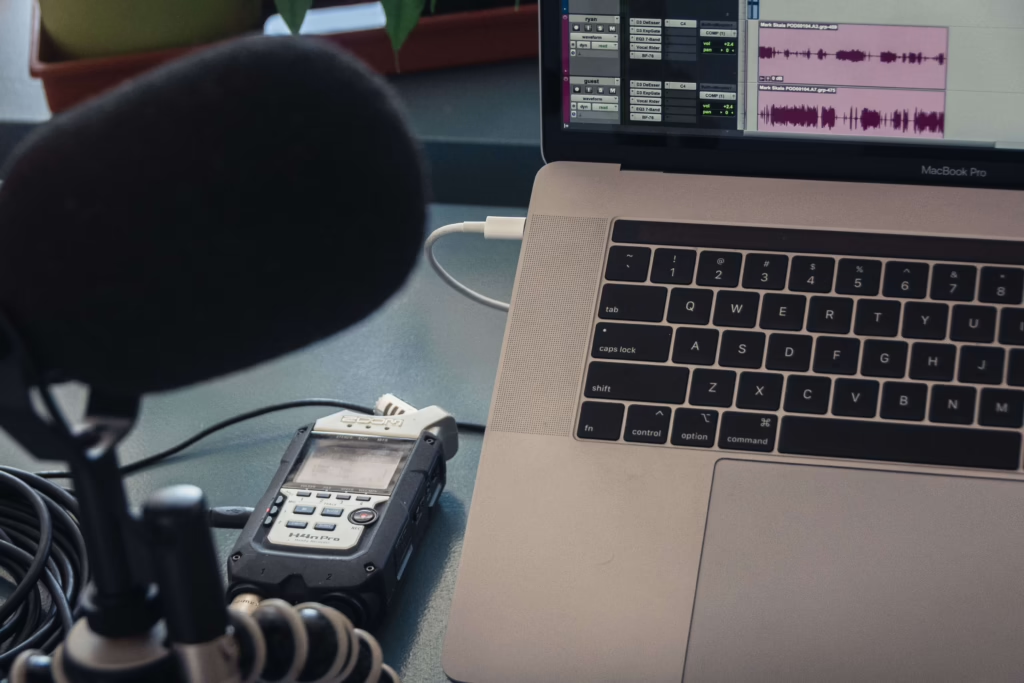
Why do millions of people press play on the same podcast every week or stay tuned to the same radio host on the drive home? The top most listened to podcasts and most listened to radio shows show that a big audience is rarely built on luck alone. Strong hosts, clear programming, useful content, and a reason to return all matter. If you want a career in broadcasting, this article looks at what today’s leading shows can teach you and how those skills connect to our Radio & TV Broadcasting program.
What You Should Know Before You Start
Do you have to pay to listen to the top podcasts and radio shows?
- Most of the podcasts on this list stream free through any podcast app, though a few offer a paid, ad-free version of the same episodes.
- AM/FM radio stations remain free everywhere they broadcast, no subscription or app required.
- Shows like The Joe Rogan Experience now publish across multiple platforms at once, so a free option and a paid option often sit side by side for the same episode.
How much time do people actually spend listening each week?
- On average, regular listeners give podcasts and radio a real chunk of their day, fitting them into a commute, a workout, or the rest of their daily lives.
- Long-form shows like The Joe Rogan Experience require a greater time commitment per episode, while a shorter daily news podcast fits into a quick break.
- Weekly radio listening tends to cluster around morning and evening drive times, which is exactly why those slots remain so competitive.
Is it easier to break into podcasting or radio broadcasting?
- Podcasting has a lower technical barrier to entry, since anyone with a microphone and an internet connection can publish an episode the same day.
- Radio broadcasting still runs through a station, its equipment, and often some formal training before you touch a live mic.
- Building a real audience takes similar work either way, since consistency and a clear format matter more than which platform you start on.
Table of Contents
- Why Do People Listen to Podcasts?
- What the Top Most Listened to Podcasts Can Teach You
- What Joe Rogan Can Teach You About Conversation
- What Top Morning Radio Shows Teach About Routine
- What Top Sports Radio Shows Teach About Multiplatform Media
- What the Most Listened to Radio Shows Teach About Trust
- What Does It Take to Build a Show People Stay Tuned To?
- Turn Listening Into Broadcasting Experience
- Frequently Asked Questions
Why Do People Listen to Podcasts?
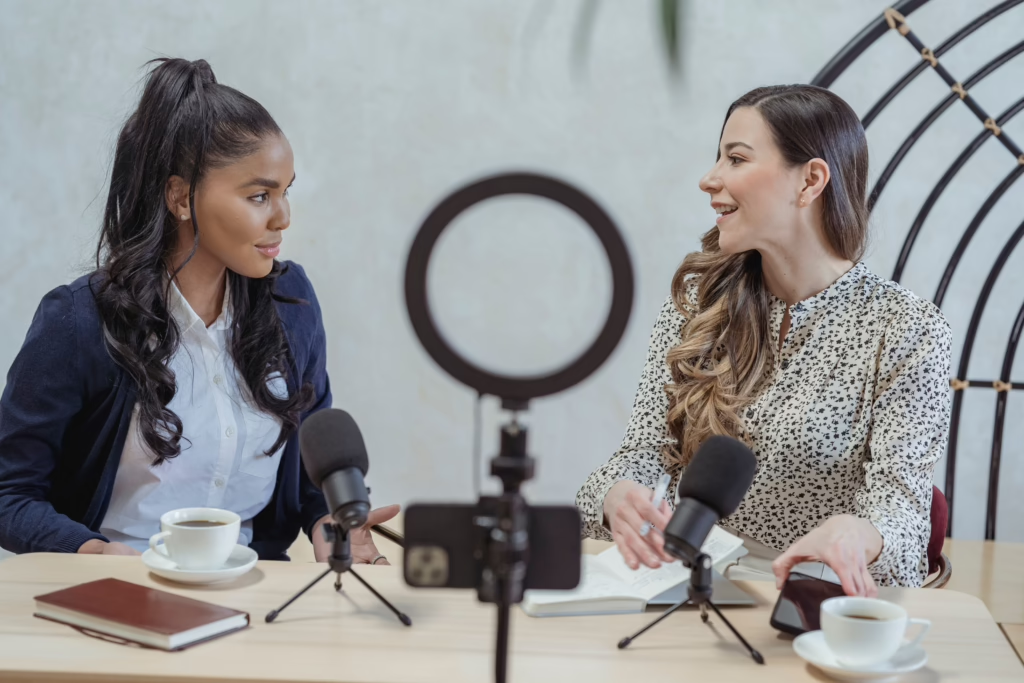
So, why do people listen to podcasts when radio, television, music, news, and thousands of other entertainment choices already compete for their time?
Control is a big part of the answer. You can stream an episode when it fits your life, follow a subject you care about, or find a niche category that an FM station may never have space to program. Podcasts also give listeners more time for conversation, knowledge, comedy, and discussion than many traditional radio programs can.
Edison Research’s Infinite Dial 2026 found that 58% of Americans age 12 and older consumed a podcast in the last month and 45% did so in the last week. It also found that 57% had both listened to and watched a podcast, showing how podcasting, radio, internet video, and television increasingly overlap.
For future broadcasters, the lesson is simple: people listen for information, entertainment, personality, fun, and connection. These expectations now follow audiences wherever they consume content.
What the Top Most Listened to Podcasts Can Teach You
Based on Edison Podcast Metrics for the second quarter of 2026, the top most listened to podcasts in the U.S. included:
- The Joe Rogan Experience
- Crime Junkie
- The Daily
- Call Her Daddy
- SmartLess
- Dateline NBC
- New Heights with Jason and Travis Kelce
- This Past Weekend with Theo Von
- Stuff You Should Know
- MrBallen Podcast
What matters is not memorizing the list. It is seeing why very different genres build loyal audiences.
Crime Junkie and MrBallen use narrative pacing. The Daily turns a complicated news issue into a focused episode. SmartLess and This Past Weekend rely heavily on funny conversation and personality. New Heights combines sports knowledge with chemistry and insider access.
The strongest podcasts make it clear what kind of experience the audience will get before they even press play.
What Joe Rogan Can Teach You About Conversation
The Joe Rogan Experience is useful for study because it shows that long-form discussion can still hold attention in a short-form content world.
Joe Rogan often gives guests time to develop an idea instead of forcing every answer into a short radio broadcast format. That does not mean you need to copy Joe Rogan or make every episode several hours long.
The lesson is in the listening.
Good hosts prepare, but they also stay present. They hear when a guest says something worth following and let the conversation move somewhere unexpected.
That skill applies across podcasts, talk shows, radio, television, and interview-based content.
What Top Morning Radio Shows Teach About Routine
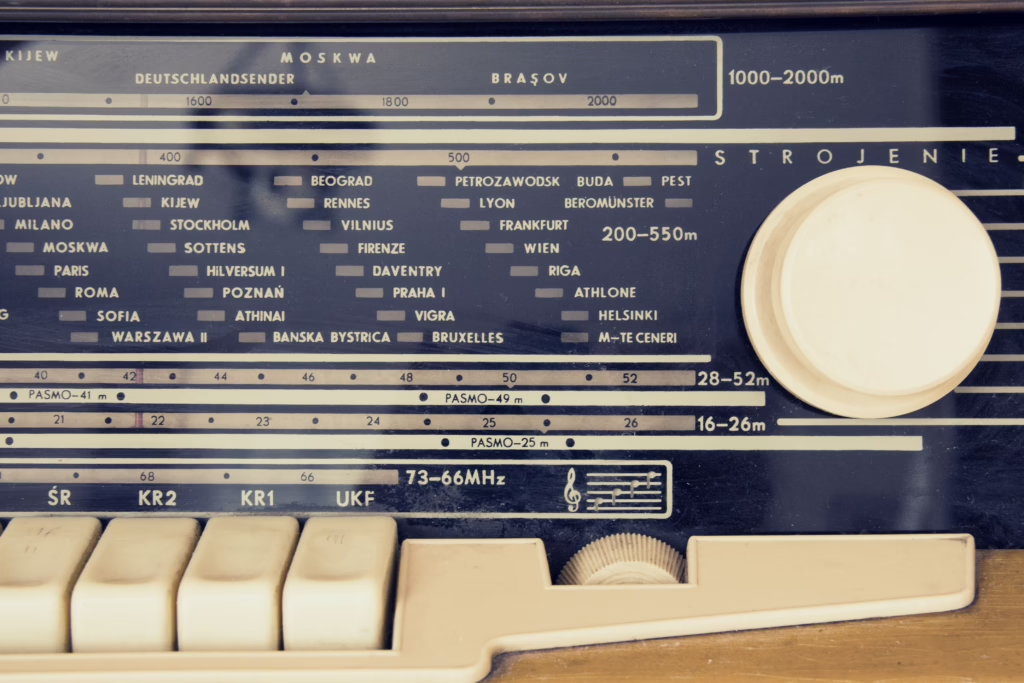
Podcasts give people control over when they listen. Top morning radio shows win by becoming part of somebody’s routine.
NPR’s Morning Edition is one example of a long-running morning program built around news, interviews, and recurring segments. Commercial stations may add more comedy, games, callers, sports, or entertainment, but the programming principle is similar: give listeners a reason to come back tomorrow.
Radio hosts also know that people tune in and out. A listener may join halfway through a discussion, switch stations, or arrive home before the segment ends.
That means hosts need to:
- Reset the subject without sounding repetitive.
- Keep segments moving.
- Build recognizable features.
- Balance information with personality.
- Give listeners a reason to stay tuned.
If top morning radio shows interest you, listen like a producer. Notice how the hour opens, when the host resets the conversation, and how the show moves between serious and fun content.
What Top Sports Radio Shows Teach About Multiplatform Media
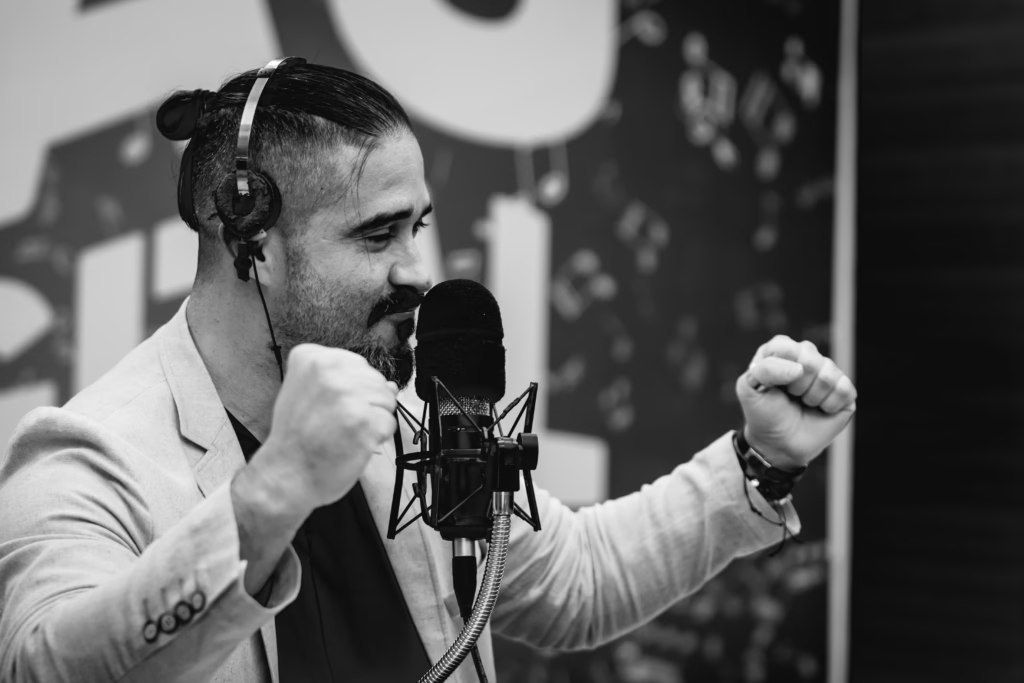
Some of the best examples of modern broadcasting come from top sports radio shows because one program can now live across radio, podcasts, television, a website, video clips, and an internet stream.
The Dan Patrick Show and The Herd with Colin Cowherd are examples of sports programming that extends beyond a traditional radio station. New Heights came from the opposite direction, building through podcasting while also becoming a major sports-media brand.
The same expansion is underway in BeOnAir’s own campus markets. Cleveland’s 92.3 The Fan, Chicago’s 104.3 The Score, Denver’s 104.3 The Fan, and Miami’s 104.3 WQAM each anchor a local sports-talk audience while distributing that same programming through podcast feeds, streaming apps, and team-specific digital coverage.
This tells future broadcasters something important: the job is no longer limited to one platform.
Sports broadcasters may need to research, interview guests, work with sound, understand camera basics, edit clips, use streaming technology, and adapt the same discussion for different audiences.
If that side of the industry interests you, our Sports Broadcasting program gives you a place to practice those skills.
What the Most Listened to Radio Shows Teach About Trust
There is no single national chart for the most listened to radio shows that works exactly like a podcast ranking.
Radio audience data can be based on stations, markets, networks, formats, average audience, or cume, so the source matters.
TALKERS’ 2026 Heavy Hundred is one useful industry reference, although it is not purely a listener ranking. Its assessment includes factors such as ratings, impact, longevity, revenue, recognition, talent, and uniqueness.
Shows such as The Sean Hannity Show, The Ramsey Show, and The Howard Stern Show also demonstrate how radio brands can extend into podcasts, video, websites, and other services.
That same durability exists closer to home. Cincinnati’s 700WLW has broadcast continuously since March 1922, and Columbus’s News Radio 610 WTVN traces its own roots to the same year, making both stations living examples of how a local news and talk format can hold an audience across a full century of changing technology.
The bigger broadcasting lesson is trust.
A strong host can build an audience over years. When technology changes, that audience may follow the show from terrestrial radio to an app, a podcast feed, a website, or a video stream.
What Does It Take to Build a Show People Stay Tuned To?
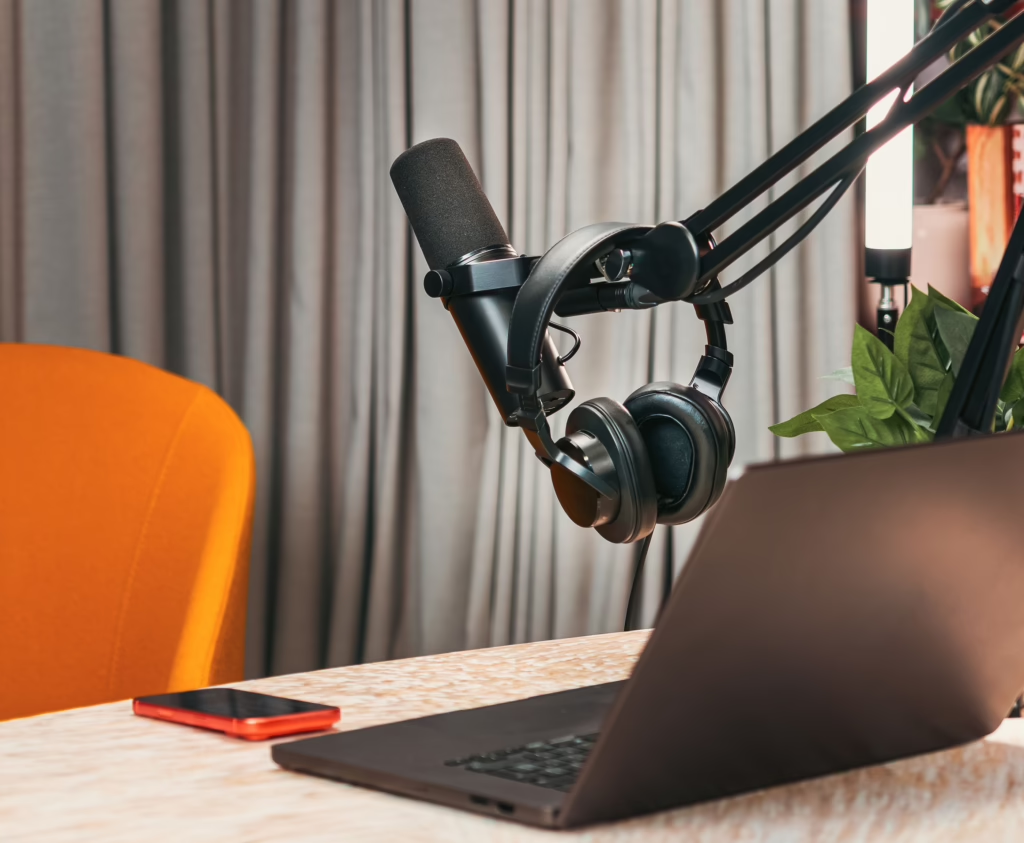
The top shows sound different, but the fundamentals are surprisingly similar.
- Know what your show is about: News, comedy, sports, entertainment, and interview shows need a clear point of view.
- Respect your audience’s time: A 20-minute episode and a three-hour discussion can both work if the content earns the time.
- Prepare, then listen: Research gives you talking points, but good hosts know when to follow the conversation.
- Learn the production: Sound, editing, music, timing, and technology affect what the audience hears.
- Be consistent: Whether you publish every day, week, or month, give people a schedule they can follow.
- Review your work: Find where the energy drops, the question misses, or the discussion becomes repetitive.
There is no course or formula that can guarantee millions of listeners. Popularity is built over time. The goal is to develop skills that make every episode or radio broadcast stronger than the last.
Turn Listening Into Broadcasting Experience
You probably already know which shows you enjoy. Now start asking why they work.
Through our BeOnAir Radio & TV Broadcasting program, you can practice interviewing, on-air delivery, audio production, radio programming, and studio work. Our wider programs cover sports broadcasting, audio, digital media, film, and television, helping you find the kind of work that interests you most.
You do not need prior broadcasting experience, an expensive home studio, or thousands of followers to start. You need practice, feedback, equipment, and a chance to turn what you hear into something you can create yourself.
Explore our campus locations, contact our team if you have questions, or apply online when you are ready to begin.
Frequently Asked Questions About Podcasts and Radio Shows
Why do people listen to podcasts instead of radio?
Why do people listen to podcasts? Often because they can choose the exact episode, subject, and time that suits them. Radio offers something different: live programming, local information, and the shared experience of hearing something as it happens.
What are the top most listened to podcasts right now?
In Q2 2026, Edison ranked The Joe Rogan Experience, Crime Junkie, and The Daily as the top three U.S. podcasts by reach among weekly podcast consumers. Rankings change, so check the date and source rather than relying on a past January or August article.
What are some top sports radio shows to study?
The Dan Patrick Show and The Herd are useful examples because they work across radio, podcast, and digital distribution. Studying top sports radio shows can teach you how hosts combine sports news, analysis, interviews, personality, and live timing.
Are top morning radio shows still relevant?
Yes. Morning radio still serves listeners who want news, traffic, entertainment, conversation, and company as they start their day. Strong top morning radio shows succeed by combining useful programming with familiar voices and a consistent routine.
What does cume mean in radio?
Cume is the total number of different people who listen to a station or radio program during a specific period. It differs from average audience, so always understand which measurement is being used when comparing radio programs.
Can listening to podcasts help me become a better broadcaster?
Yes, if you listen actively. Study the opening, questions, pacing, sound, editing, discussion, and ending, then record something yourself. That process helps turn entertainment into practical broadcasting knowledge.