

Your first day on a film set can feel like everyone around you is speaking in code. Someone calls “sound speed,” another asks for a hot brick, and suddenly the assistant director is ready to roll camera. These film set terms exist because a film crew needs to communicate quickly, stay safe, and keep dozens of moving parts working together. If you want to work in film production, learning the language can make your first days on set easier. This guide covers the terminology worth knowing before you step into a Film & Video Production environment.
Quick Guide to Common Film Set Terms
| Film Set Term | What It Means |
|---|---|
| Call sheet | The daily document showing when and where cast and crew report and what is scheduled to be filmed. |
| Call time | The time you are required to report for work. |
| Rolling | Camera or sound recording has started. |
| Sound speed | Confirmation that the sound department is recording and ready. |
| Hot set | A set that should not be altered because continuity must be preserved. |
| Apple box | A wooden box used to raise or support people, equipment, furniture, or props. |
| Video village | The monitor area where key team members can view the camera feed. |
| Abby Singer | The second-to-last shot or setup of the day. |
| Martini shot | The final shot or setup of the day. |
| Hot brick | A fully charged walkie-talkie battery. |
| Hot points | A safety warning used when someone is moving through the set with potentially hazardous equipment. |
| Craft services | The area or team providing snacks and refreshments during production. |
Table of Contents
- Quick Guide to Common Film Set Terms
- Why Film Set Terminology Exists
- Who Does What on a Film Set?
- Camera and Shot Terms You Will Hear
- What Happens Before the Camera Rolls?
- Why Do We Still Use Terms From the Film Stock Era?
- Film Industry Slang You Will Hear on Set
- Call Sheets, Call Times, and Production Paperwork
- Walkie-Talkie and Safety Lingo
- What Not to Say or Do on a Film Set
- Learn the Language by Using It
- Frequently Asked Questions
Why Film Set Terminology Exists
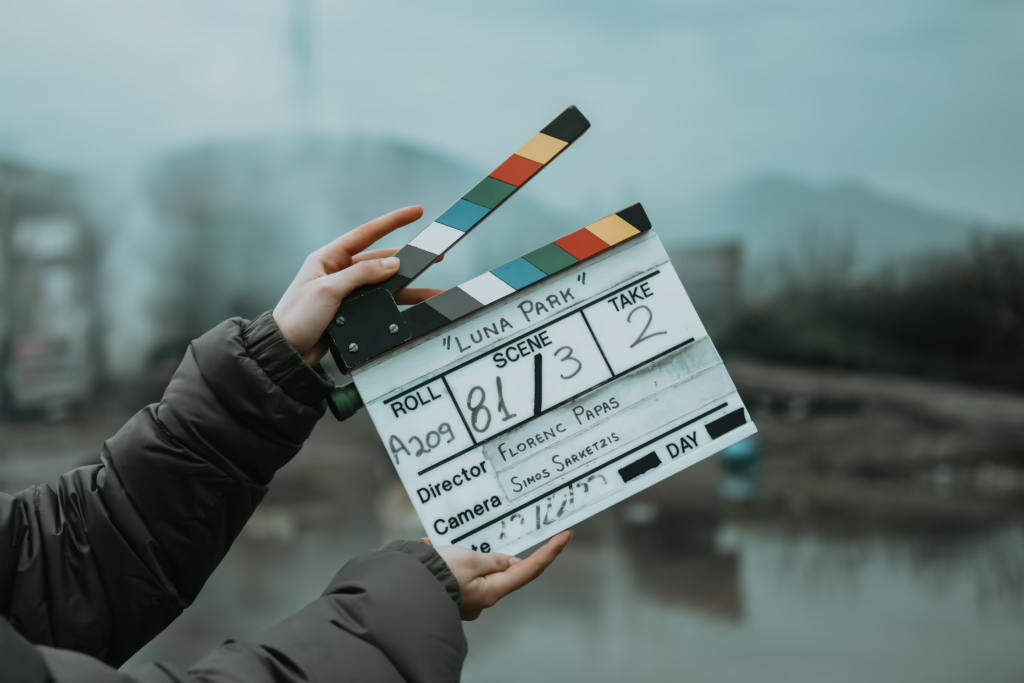
A shooting day costs time and money. Nobody wants a two-minute explanation when three familiar words can communicate the same thing.
That is why film industry slang develops. Short calls tell the production team what is happening without bringing the set to a stop. The IATSE Local 476 glossary includes many terms used across film departments.
You do not need to memorize hundreds of film terms before your first job. Start with the language that affects safety, set status, filming, and your own department.
Who Does What on a Film Set?
A film crew is divided into departments, and knowing who does what can save time when you need help.
- The director leads the creative vision, while the assistant director team helps keep the shooting day moving.
- The first assistant director, or 1st AD, coordinates the schedule and departments on set.
- The second AD typically works with the call sheet, cast logistics, and production paperwork. You can learn more about what a film director does on set.
- Other key roles include the camera operator, key grip, and Best Boy Electric or Best Boy Grip, who supports the gaffer or key grip with crew, equipment, and department logistics.
- Production managers help control schedules, logistics, and costs, while department heads lead areas such as camera, sound, grip, electric, art, hair, makeup, and wardrobe.
You do not need to know everybody’s complete job description on day one. What matters first is knowing who to speak to without interrupting the wrong department during a take.
Camera and Shot Terms You Will Hear
A shot is one continuous piece of footage recorded between the camera starting and stopping. A single scene may require several shots so the editor has choices later in post-production.
A long shot shows more of the subject and environment. A close-up brings the audience closer to a face or detail. An aerial shot shows the location from above, while a one-shot frames one person.
Different camera angles can also change how a moment feels.
The type of film camera being used can affect the options available, but frame composition still matters. Camera operators also need to think about lens choice, movement, framing, and an actor’s eye line.
What Happens Before the Camera Rolls?
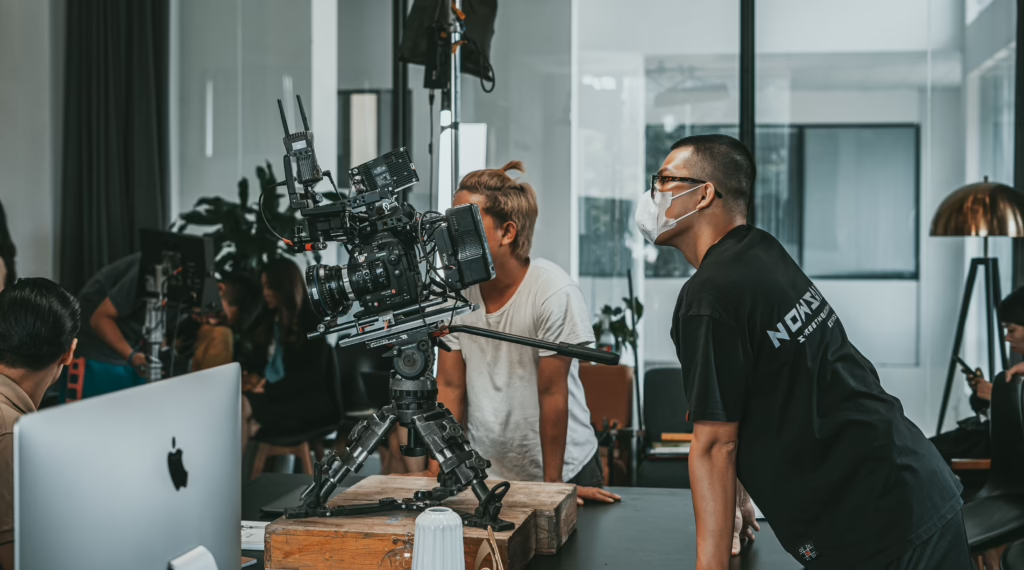
During pre-production, the production company plans the schedule, cast, crew, filming location, equipment, and logistics. Once production begins, those plans become individual scenes and setups.
A typical setup moves from blocking the scene to camera and lighting preparation, sound setup, rehearsal, and final checks.
When recording begins, you may hear “Roll sound.” The sound department starts recording and may answer “sound speed.” Camera then rolls, the slate identifies the scene and take, and once everyone is ready, the director calls “action.”
Recognizing these calls helps you avoid moving, talking, or walking through the frame at the wrong moment.
Why Do We Still Use Terms From the Film Stock Era?
Many modern film terms come from the era when cameras recorded onto physical film stock.
Traditional photographic film contains light-sensitive material, so crews developed specific language around loading, exposure, and handling.
Even as digital cameras became standard, much of the language stayed.
Our guide to loading film into a camera explains this process in more detail.
Film Industry Slang You Will Hear on Set
- A hot set must remain untouched so continuity is preserved. If a cup, chair, prop, or apple box moves between shots, the audience may notice. If you hear “hot set,” do not move anything without permission.
- An apple box is a wooden box used to raise actors, equipment, furniture, or props into position.
- Video village is the monitor area where the director, script supervisor, producers, clients, or other key team members can watch the camera feed.
- The martini shot is the final shot or setup of the day. The Abby Singer is the second-to-last.
- Craft services, often called “crafty,” provides snacks and refreshments during production. Knowing where it is can be useful. Standing there while your department is waiting for you is less useful.
Call Sheets, Call Times, and Production Paperwork
Your call sheet is one of the most important documents you will receive. It typically includes the shooting schedule, your call time, filming location, scenes, cast information, weather, safety information, and production contacts.
Read it carefully. Your call time tells you when you are required to report, so arrive with enough time to check in and find your department.
You may also encounter a deal memo, which records employment details agreed between a crew member and the production company, including compensation and potentially screen-credit terms.
After filming, post-production brings together editing, sound, color, effects, and finishing. If that broader process interests you, our guide to whether video production is a good career explores where those skills can lead.
Walkie-Talkie and Safety Lingo
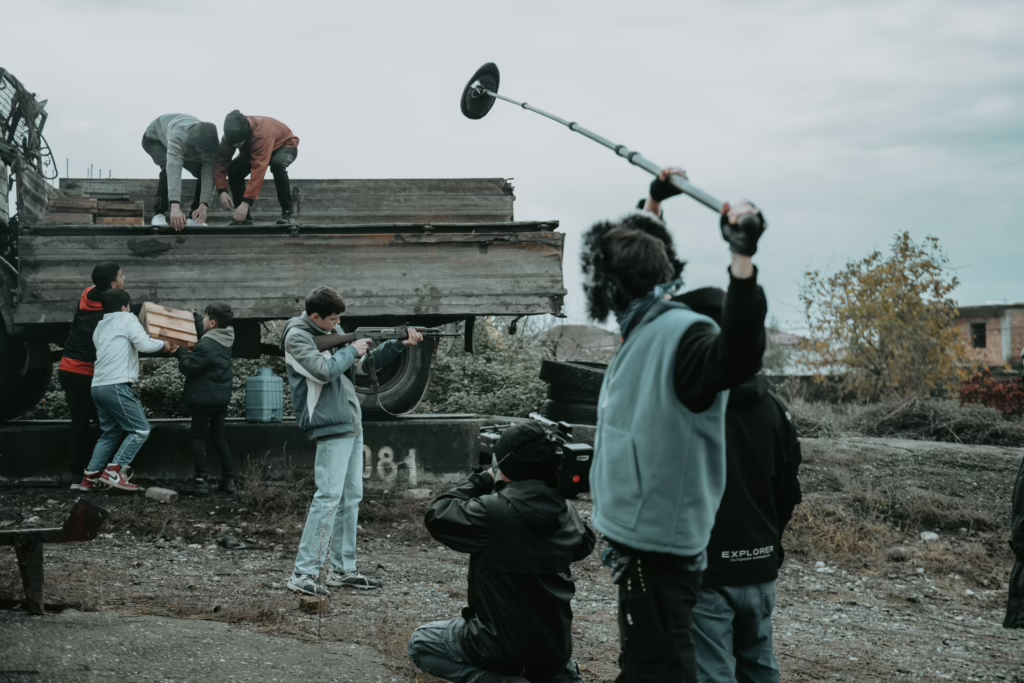
A walkie-talkie may be one of the first pieces of equipment you are given on a busy production. Good radio communication is short.
Copy means you heard and understood the message. Standing by means you are ready and waiting. A hot brick is a fully charged radio battery.
The most important thing a newcomer can learn about walkie-talkie communication is restraint. Give people the information they need, confirm that you received the instruction, and clear the channel.
You may also hear “hot points.” This is a safety warning used when someone is carrying equipment through a crowded area that could strike or injure someone nearby.
Clear communication matters even more during complicated sequences. Our guide to filming fight scenes shows why movement, stunts, cast, camera, and safety all need to work together.
What Not to Say or Do on a Film Set
- Do not call “cut” or “action” unless that is your job.
- Do not walk through an actor’s eye line while the camera rolls, touch anything on a hot set without permission, talk while dialogue is being recorded, or move equipment because you think it would look better.
- When you are unsure, ask the right person at the right time.
- Resetting a film set can affect continuity, lighting, camera placement, the next shot, and production costs.
- These rules protect the work the crew has already done.
Learn the Language by Using It
You can watch free training videos or memorize a glossary, but film set terminology makes sense much faster when you hear it during an actual production.
Through our Film & Video Production program, you will work through pre-production, camera operation, lighting, audio, production, editing, and post-production.
You begin to see why one scene may need several shots, why an assistant director watches the clock, and why an entire crew needs to know what “rolling” means immediately.
The goal is not to memorize every piece of slang before your first job. It is to become comfortable enough with the workflow that you can listen, understand, and contribute on a production.
You can hear from our students on our testimonials page, learn more about BeOnAir, or explore our full range of media programs.
Ready to Go From Learning the Terms to Using Them?
Knowing film set terms can help you understand what is happening around you. Using them during an actual production is where that knowledge becomes practical. If you want hands-on experience inside a film studio and production environment, book a campus tour to see BeOnAir for yourself, contact us to talk through your options, or apply online when you are ready to start training.
Frequently Asked Questions
What does a camera operator need to know about film cameras and the camera lens?
A camera operator needs to understand how different film cameras, lenses, and camera frames affect what the audience sees. They also need to execute camera moves, maintain the correct framing, and capture different shots of the same scene so the editor has useful options later. On an experienced crew, the operator works closely with the cinematographer, focus team, grips, and other departments rather than making those decisions alone.
How does a film crew keep continuity when filming the same scene across different shots?
A film crew may shoot the same scene from several angles, sometimes hours or days apart. The script supervisor tracks continuity, including where each cast member stands, props, eye lines, dialogue, and details visible in the first shot and next scene. Dailies, or footage shot and reviewed after a shooting day, also help the production team catch problems before the project moves too far forward.
What should a crew member know before recording dialogue during film production?
Before recording dialogue, every crew member needs to know when the set is rolling and when they must stay quiet. Blocking usually happens first so actors can rehearse movement before the camera is fully set up, allowing camera, sound, and lighting teams to prepare. Once filming begins, even a small noise from the production office, equipment, or a nearby cast member can ruin otherwise usable audio.
How do film cameras capture an aerial shot, and what is a second unit?
An aerial shot may be captured using a drone, a crane, a helicopter, or another specialized camera setup, depending on the production. On larger films, a second unit may film aerial footage, action, establishing material, or other shots separately from the main cast and director. The goal is not simply to create a dramatic single image, but to capture footage that supports the story and connects naturally with the other images and scenes in the edit.
What does the best boy do, and how is that different from the rest of the film crew?
The best boy is the primary assistant to either the gaffer in the electrical department or the key grip in the grip department. The gaffer leads the electrical lighting crew, while grips set up and maintain equipment that supports cameras and lighting, including tools used to control artificial light. On most films, an experienced crew depends on these departments working together so camera movement, lighting, and production stay safe and efficient.
Why do apple boxes and eye lines matter when framing certain characters?
An apple box may look like a simple wooden box, but crews use it to adjust the height of a person, prop, camera, or piece of equipment; a pancake is the thinnest version for small changes. Those adjustments can affect the eye line, especially when certain characters are filmed separately, and the editor later needs two images to make it look as though the actors were facing one another. Crossing the line or changing an eye line incorrectly can make a scene’s geography confusing, which is why crews check these details before moving on to the next project setup.