
Get the Skills to Become a Podcast Producer
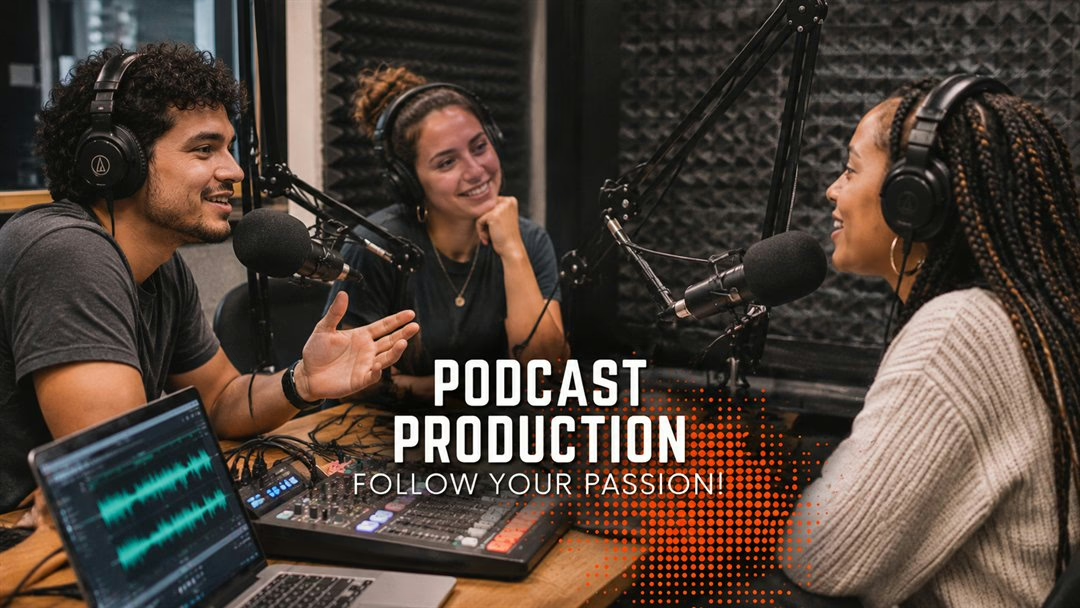
8-Month* Podcast Production Training Program
Podcast production covers every step of turning an idea into a finished show, from planning each podcast episode and recording interviews to editing audio, publishing new episodes, and building a podcast audience. News, entertainment, and commerce no longer reach people only through nightly newscasts and commercial broadcasts. Much of it now arrives through podcasts, short video clips, and online channels, and business leaders, advertisers, and storytellers need people who can produce professional audio and video podcasts.
This program draws on our Radio & TV Broadcasting curriculum with upper-level courses in podcast storytelling and production. You do not need to complete that program first. You’ll sharpen your research and writing for podcasts and social media, develop an on-air voice and personality that works across platforms, and build advanced audio production skills and video skills for short-form content. The program prepares you to help companies design storytelling and web-based marketing campaigns, or to start a podcast of your own and grow your social media presence.
Want to see where you’d train? Book a campus tour to see our studios and meet the students and instructors you’d work alongside.
Becoming a Qualified Podcast Producer
Podcasting rewards people who can do more than talk into a microphone. Producers research and write, conduct interviews, capture high-quality audio, brand a show, read the numbers, and know where the legal lines sit. Our program trains each of those podcast production skills through hands-on work in a software-based studio with microphones, portable recorders, and recording and editing software.
Your instructors work in media while they teach, so the knowledge you gain reflects how professional audio gets made today. That’s what “Learn from a Pro to Be a Pro” means at BeOnAir. Across the program, you’ll build podcasting skills in:
- Podcast storytelling techniques, research, and question writing
- Interviewing and hosting with a voice and personality that fit each platform
- Recording and editing professional audio in a digital audio workstation
- Audio and video production for short-form content and video podcasts
- Podcast branding, distribution, and audience growth
- Podcast analytics, business planning, and monetization
- Copyright, fair use, and ethical reporting
If music recording and sound engineering interest you more than hosting and storytelling, our Audio Production program focuses on them.
Podcast Production Courses and Classes Overview
Our diploma program starts with the professional foundations every media career needs, then moves into four podcasting courses that take a show from concept to business. Rather than a single podcast course on recording basics, each class builds on the last, so you complete the program with a pilot episode, a show brand, and a plan to grow your podcast audience.
Speak, write, and present like a media professional
You’ll practice the communication skills media workplaces run on, from public speaking and presentations to proposals, emails, and social media writing. The course closes with a final communication project built around your program.
Put AI to work in your content, responsibly
You’ll study how artificial intelligence developed and how it’s changing the media industry, then use AI in your own content creation. Discussions on ethics and critical thinking guide how you use these tools, and the course ends with a final project that applies AI to your program.
Learn the channels that grow an audience
You’ll study core sales and marketing principles and survey today’s marketing channels, including websites, blogs, SEO, pay-per-click, affiliate, social media, and mobile. Practical analytics tools help you measure what works, leading up to a final marketing project.
Understand the business behind the content
You’ll examine streaming media and digital distribution, along with the management, legal, and financial sides of podcasts, film, television, music, and digital media. You’ll also study business models, the roles within the industry, and ethical business planning.
Take a podcast from concept to completion
You’ll study the podcasting industry, the formats that succeed commercially, and the ethics of audio content creation. In the studio, you’ll learn to choose the right microphone, operate portable recorders, record high-quality audio, and handle sound editing in a digital audio workstation, adding music and sound effects. You’ll also choose a hosting platform, distribute episodes to major directories, design cover art, and write a marketing plan.
Build compelling podcasts people want to follow
You’ll develop narrative podcasts that share stories through story structure, research, question writing, interviewing, and journalistic technique, then produce a podcast pilot or short narrative audio piece for your portfolio. You’ll also build a brand identity for a show, from its unique selling proposition, logo, and hooks to optimized titles, episode names, and descriptions. Audiograms, video clips, and social media strategy help you turn listeners into a community.
Turn your podcast into a sustainable business
You’ll track the numbers that matter, including downloads, subscribers, listen-through rates, and audience demographics, and use them to shape topics, formats, and release schedules. You’ll write a business plan for a new or existing show and promote it through social media, SEO, and cross-promotion. You’ll also map out revenue beyond ads, from sponsorships and direct listener support to premium content, affiliate marketing, and merchandise.
Protect your work and publish with confidence
You’ll learn the basics of copyright, trademarks, and intellectual property, including how to use third-party music, sound effects, and video clips. The course also covers protecting your show’s name, logo, and scripts, the legal implications of AI-generated content, and how to avoid defamation while separating fact from opinion.
Is a Career as a Podcast Producer Right for You? Take the Beonair Network “Podcast Production Career Training Readiness Quiz”
This fun, online quiz takes 3 minutes to complete and you’ll get a personalized report. Identify your strengths and social style plus the training and positions you’re best suited for. Get Your Podcast Production Career Training Readiness Score Now >>
Where You Can Study This Program
The Podcast Production program is available at our Media Schools in Cleveland, Columbus, Downtown Chicago, O’Hare and Denver.
What Podcast Production Involves, From First Idea to Published Episode
Whether you’re launching your own podcast or producing a show for a brand, the work follows three stages. Each one shapes how professional audio sounds by the time it reaches listeners.
- Pre-production: You define the show’s theme, target audience, and episode structure, then research, outline, and line up guests. If you’re still shaping ideas for a concept, our guide to finding good podcast topics can help.
- Production: You record each podcast episode, as audio only or as one of the video podcasts many shows now publish. Good microphone technique, a quiet space, acoustic treatment that prevents echo, and headphones for monitoring all help you capture clean audio. Remote recording software lets you record guests who can’t come to the studio.
- Post-production: You edit for clarity while keeping the conversation’s natural flow, then mix and master for balanced sound and consistent loudness and export a clean file. Finished episodes go out through the show’s RSS feed to podcast platforms such as Apple Podcasts.
Consistent scheduling and well-structured episodes keep listening audiences coming back. That’s why our courses treat planning and promotion as seriously as recording.
Is a Career as a Podcast Producer Right for You? Get More Info…
If podcast production is the career you want to build, whether you want to start a podcast or produce shows for companies, take the next step and apply today. Financial assistance is available for those who qualify, so ask about financial aid when you talk with us.
Have questions about our programs, locations, or how the training works? Contact our admissions team and we’ll help you find your fit. International students can find enrollment information on our dedicated page.
For immediate answers, give us a call at:
Chicago – Downtown: 312-854-7997
Chicago – O’Hare: 630-793-4676
Cleveland: 216-270-7376
Columbus: 740-913-4019
Denver: 720-712-2568
*Program length when completed in normal time.
Frequently Asked Questions
A podcast course usually teaches one part of the job, such as recording basics or editing, and many run online as self-paced courses you finish on your own schedule. A podcast production program trains the whole job: storytelling, interviewing, studio recording, editing, branding, analytics, business planning, and media law.
At BeOnAir, you train in our studios with instructors who work in media and gain real-world experience building portfolio work along the way. If you want podcasting to become a career rather than a hobby, a full program gives you a broader body of work to show employers and clients.
The best way to learn podcasting pairs instruction with repetition: you plan, record, edit, and publish episodes, get feedback, and do it again. If you’re working out how to learn podcasting or how to start a podcast from scratch, free tutorials can teach you the tools, and that’s where many new podcasters begin.
Those tutorials often skip interviewing, branding, analytics, and the legal side of publishing. Structured training fills those gaps and gives you deadlines, studio time, and instructors who critique your work.
Not if your program teaches editing as part of production, and ours does. In our first podcast course, you’ll record and edit high-quality audio in a digital audio workstation. A standalone podcast editing course can help you go deeper on one tool later, but editing makes the most sense when you learn it as part of audio production, alongside recording, storytelling, and distribution.
You can study podcasting through a university certificate, a community college, a career school, or online podcasting courses, so compare what each one has you actually do. Look for podcasting schools that give you regular studio time, cover the full production process, and teach the business and legal sides of podcasting along with the technical skills. Instructors who currently work in media matter too, because podcasting tools and platforms keep changing.
Ask whether you’ll finish with portfolio work, such as a pilot episode, that you can share with employers or clients. Then book a tour and see our studios for yourself.
Yes, for many shows it does. Plenty of podcasts now publish video podcasts alongside audio, using full episodes and short clips on platforms such as YouTube to reach new listeners. Our program builds advanced audio and video production skills for short-form formats, and you’ll learn to create audiograms and video clips that grow a show’s community.