
What makes someone a good broadcast journalist? It is not simply a polished voice or an outgoing personality. Strong broadcast journalism characteristics include curiosity, clear communication, sound judgment, practical production skills, and the ability to stay focused when news changes quickly. Let’s take a look at the most important journalism skills and the many opportunities available both on and off camera.
What You Should Know Before You Start
How do you know if broadcast journalism is the right fit for you?
- Ask yourself whether you stay calm when plans change at the last minute, since breaking news rarely waits for you to prepare.
- Notice if you’re the person who wants the full story behind a headline, not just the surface details.
- Consider how you handle feedback, since scripts and segments get rewritten and cut constantly before they reach air.
Do you need a journalism degree to break into the field?
- Most working reporters hold a bachelor’s degree, though the major varies widely across the industry.
- Hands-on training and a strong demo reel can carry as much weight as a diploma in many newsrooms.
- Internships and campus productions give you real material to show, which matters more to hiring managers than a transcript alone.
What’s the biggest misconception about broadcast journalism personalities?
- Most people assume you have to be the loudest voice in the room to succeed.
- Some of the strongest broadcasters are quiet researchers, producers, and editors who never appear on camera.
- Your personality shapes which role fits you best, not whether you belong in the industry at all.
Table of Content
- What Makes a Good Broadcast Journalist?
- Communication Skills: Make the Story Easy to Follow
- Curiosity, Research, and the Need to Verify
- Staying Calm When the Story Changes
- Do Journalists Have to Be Extraverted?
- Do All Journalists Have to Be in Front of the Camera?
- Digital Literacy Is Essential
- Ethics and Judgment Matter as Much as Technology
- You Can Build the Skills of a Good Broadcast Journalist
- See Where Your Journalism Skills Could Take You
- Frequently Asked Questions
What Makes a Good Broadcast Journalist?
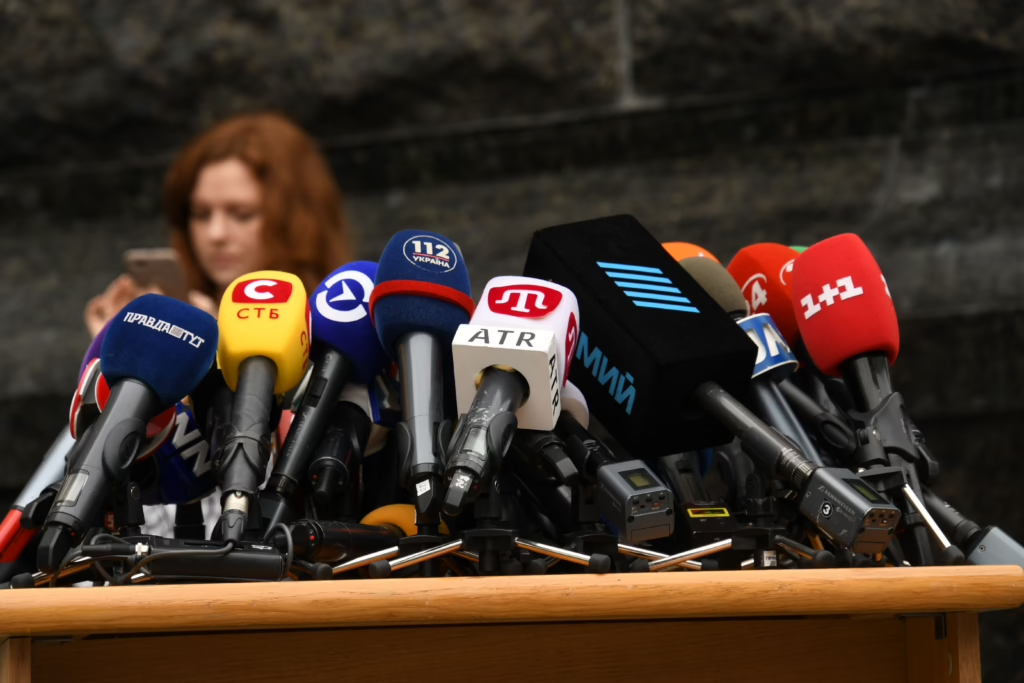
Broadcast journalism is journalism created for people to hear, watch, or consume across digital platforms. That might mean radio, a television package, a live update for television news channels, or video content published by media outlets on websites or social media.
Whatever the platform, the job remains the same: find reliable information and turn it into stories the general public can understand.
The most important characteristics of a good broadcast journalist include:
- Clear writing and communication skills
- Curiosity and strong research
- Accuracy, verification, and logical reasoning
- Composure when events change
- Digital literacy and production ability
- Sound editorial judgment
These are practical journalism skills you can develop through training and experience.
1. Communication Skills: Make the Story Easy to Follow
Broadcast writing has to sound natural when read aloud. Viewers cannot stop a live bulletin and reread the previous sentence, so the language needs to be clear, direct, and easy to follow.
Strong communication skills help journalists write scripts, conduct interviews, report naturally on radio or television, and work with production teams.
This is mass communication in practice: taking information about a subject and making it understandable for a wider audience.
A reporter covering politics may need a different approach from someone reporting on science, sport, or community events. Adjusting your delivery while keeping the story clear is one of the most useful skills you can develop.
2. Curiosity, Research, and the Need to Verify
A press release is a starting point, not the full story.
A good journalist wants the answers behind the headline. That means conducting research, checking documents, finding reliable sources, and asking what information may be missing.
It also means understanding media relations. A communications team may present one perspective on an issue, but a journalist’s responsibility is to investigate beyond that perspective.
The Society of Professional Journalists’ Code of Ethics emphasizes accuracy, verification, fairness, and accountability. Speed does not remove the responsibility to get the story right.
Logical reasoning becomes particularly important when sources disagree, or information develops quickly. Sound editorial judgment means testing what you hear, separating verified facts from assumptions, and being transparent about what is still unknown.
Whether the subject is politics, science, local news, or events elsewhere in the world, stronger research usually produces a more useful story for the audience.
3. Staying Calm When the Story Changes
Broadcast news can move quickly.
A guest may cancel, technology can fail, breaking news can change the script minutes before air, or new information can completely shift the focus of a story.
This is where focus matters.
You may need to adjust your writing, listen to instructions from a producer, continue reporting, and still make sure everything you present is accurate.
Many people are not naturally comfortable with live broadcasting. Confidence usually develops through practice: recording audio, conducting interviews, shooting video, reading scripts aloud, and learning how to respond when plans change.
Breaking news can be chaotic, but a journalist’s job is to make the situation clearer, not more sensational.
That ability is valuable in almost any broadcasting job, whether you work in front of the camera or behind the scenes.
4. Do Journalists Have to Be Extraverted?
CareerExplorer surveyed 9,500 journalists and found that journalists tend to score highly on openness and extraversion. It describes journalists as typically curious, imaginative, comfortable with variety, and often energized by people or stimulating environments. CareerExplorer also found that journalists tend to have strong artistic and enterprising interests.
These patterns can help explain why some people are drawn to journalism, but they do not mean every successful journalist needs the same personality.
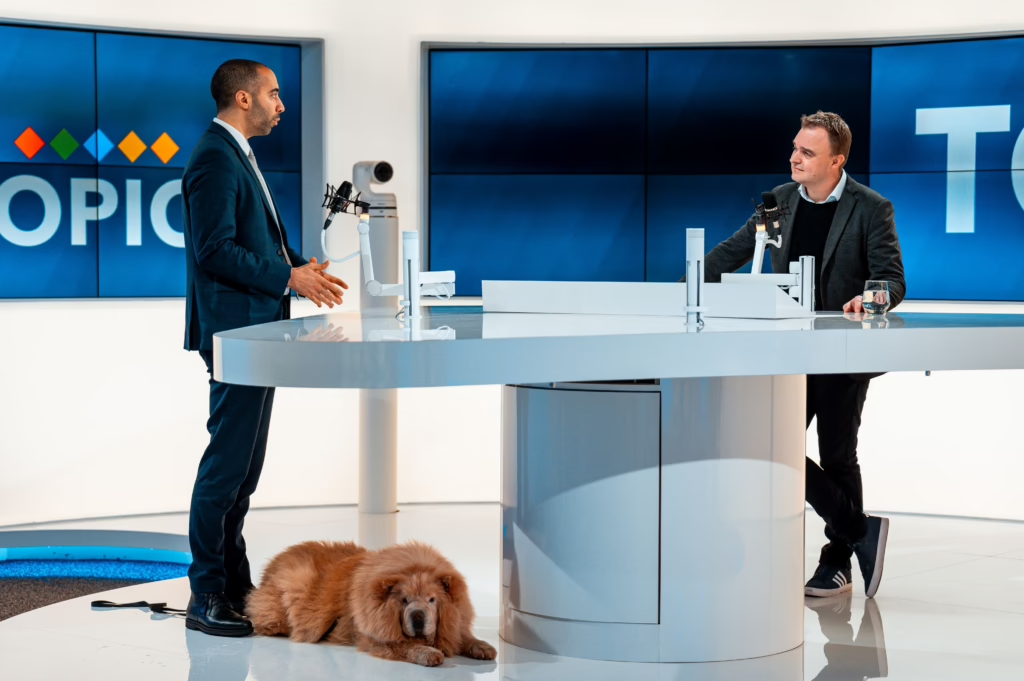
An outgoing reporter may enjoy approaching strangers, presenting live, or conducting interviews. A quieter journalist may be particularly strong at listening, research, writing, or asking thoughtful follow-up questions.
Different personality types can bring different strengths to the job. What matters most is whether you can build the communication, research, judgment, and production skills your role requires.
5. Do All Journalists Have to Be in Front of the Camera?
Do all journalists have to be in front of the camera? No.
The person viewers watch is only one part of a broadcast production.
Broadcast media also relies on producers, writers, editors, researchers, photographers, audio specialists, camera teams, and other professionals who create content for digital platforms.
Behind-the-scenes work can include:
- Writing and producing stories
- Editing video content
- Recording audio
- Gathering footage and taking pictures
- Researching a subject
- Publishing news to social media
- Supporting radio and television news channels
Multimedia reporters may handle several of these responsibilities themselves, from writing and interviewing to shooting and editing footage. Our guide to multimedia journalism explains how these roles increasingly overlap.
That creates opportunities for many different personality types. If public recognition does not interest you, there are plenty of journalism careers where the quality of your work matters more than visibility.
6. Digital Literacy Is Essential
Modern journalism does not end when a radio show or television bulletin finishes.
Stories move between websites, apps, streaming services, social networks, podcasts, and other digital channels. That makes digital literacy an essential part of modern mass communication.
A journalist may edit clips for media outlets, write web copy, publish to social platforms, work with audience data, or adapt one piece of reporting for radio, television, and online media.
Different careers emphasize different skills. One job may focus heavily on live television, another on digital production, and another on research and writing.
Understanding these differences can help students choose training that matches their interests.
Technology will continue to change. The important skill is being able to learn new tools without losing the reporting standards behind the work.
Ethics and Judgment Matter as Much as Technology
Technical skills alone do not make someone a good journalist.
Journalists make decisions about privacy, fairness, source credibility, access, accuracy, and the public interest. Having access to information does not automatically mean publishing it is the responsible choice.
Journalists also need to separate reporting from personal opinion. Whatever your own views, the goal is to report fairly, verify claims, and make the evidence clear to the audience.
Journalism does not always offer an easy answer. Reporters may need to balance speed against accuracy, privacy against public interest, or the value of an image against the harm its publication could cause.
Knowing how to make those decisions is part of what makes a good journalist.
You Can Build the Skills of a Good Broadcast Journalist
You do not need one particular personality to work in journalism. You need to develop the skills required to report, produce, and communicate well.
Through our BeOnAir Radio & TV Broadcasting program, you can practice writing, interviewing, production, radio, television, and on-camera work in a hands-on environment.
If your interests lean more toward online storytelling, our Digital Media Production program develops practical production skills for modern media.
Hands-on training, as our programs provide, is also valuable because it gives you opportunities to practice and build work you can show.
Your training should help you do more than understand theory. You should write, record, edit, interview, present, and create stories people can watch or hear.
That is how knowledge becomes practical ability.
See Where Your Journalism Skills Could Take You
You do not need one perfect personality to build a career in media.
If you are curious about the world, enjoy finding answers, care about trustworthy news, and want to become a stronger communicator, you already have a useful place to start.
Reading about the characteristics of broadcast journalism can help you identify the skills you want to improve. Experience is what helps develop them.
Explore BeOnAir’s programs, book a campus tour to see the studios in action, or contact our admissions team to talk about careers in journalism and broadcasting.
Frequently Asked Questions About Broadcast Journalism Characteristics
Why are mass communication skills important in broadcast journalism?
Mass communication requires journalists to make complex information understandable to a wide audience, often within strict time limits. Broadcast scripts typically use short sentences, active voice, and a conversational style so stories are easy to follow when heard once. Older journalism texts, including David Keith Cohler’s Broadcast Journalism from Prentice Hall, emphasized the importance of clear writing and reporting, and those principles still matter across radio, television, newspapers, and digital platforms.
How does logical reasoning help journalists report accurately?
Logical reasoning helps journalists compare evidence, question conflicting claims, identify gaps, and decide what still requires extensive research before publication. For example, a reporter investigating harmful practices in society may need to compare documents, interview several sources, and verify whether one person’s claim is supported by other evidence. Good judgment also requires attention to detail and objectivity, particularly when a story involves competing interests or strong emotions.
Why is social media literacy important for broadcast journalists?
Social media has become part of how journalists find stories, reach audiences, distribute video, and respond to breaking news, but speed also creates risks. Digital literacy helps journalists verify material before sharing it, understand how images and audio can be manipulated, and adapt reporting across different platforms. There are countless opportunities to use these skills in reporting, production, digital media, and visual storytelling, but generating online drama should never take priority over accuracy.
Do you need a university journalism course to develop strong broadcast journalism skills?
A university degree is one route into journalism, but it is not the only way to develop practical reporting and production skills. A hands-on course can help you practice writing, interviewing, audio and video, research, and digital storytelling while building work you can show to future employers. It is fine if your path looks different from someone else’s; what matters is developing the communication, persistence, digital literacy, and attention to detail required to report responsibly.